

Why Dzi
Precious gems hiding in plain sight
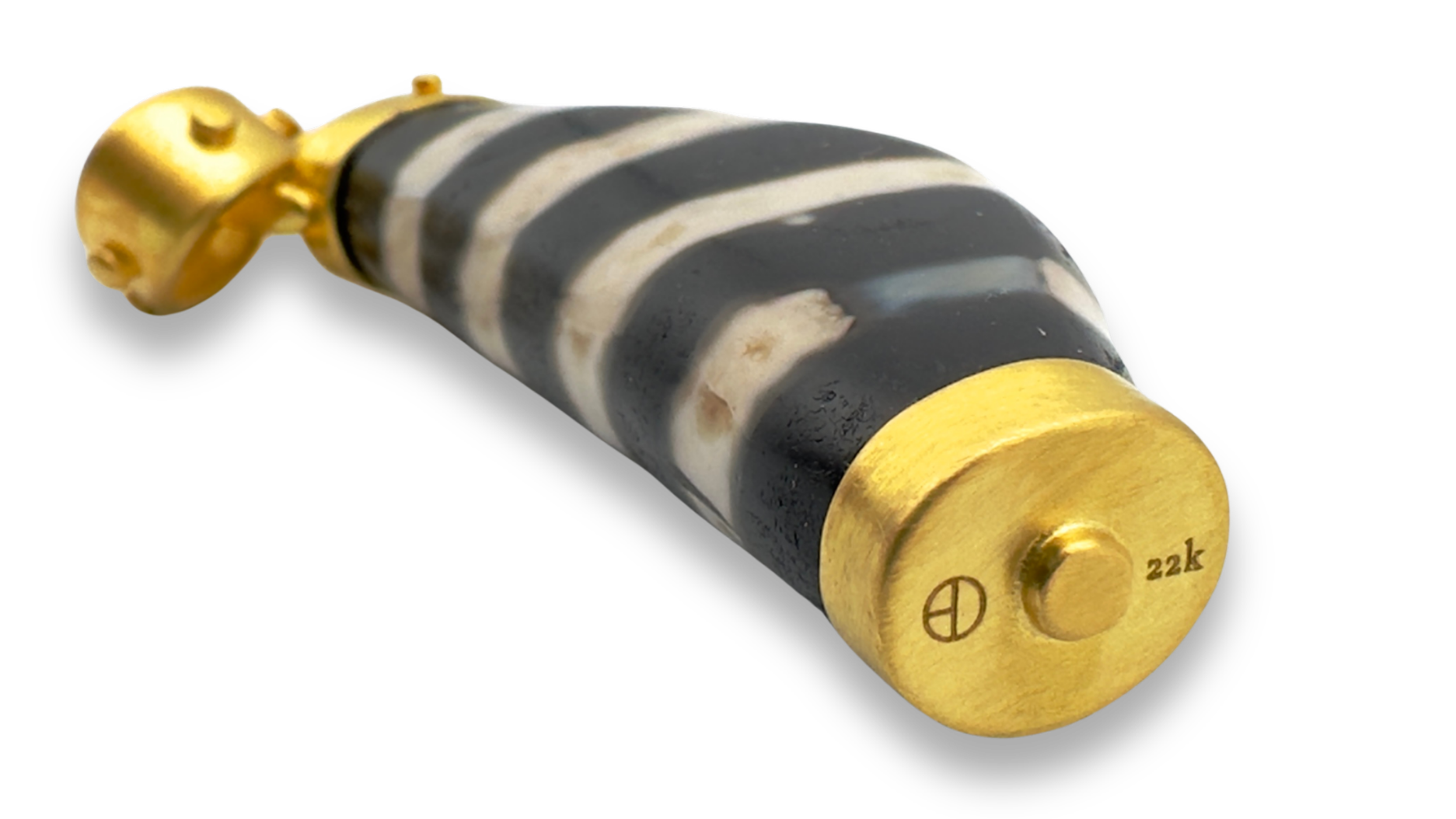
Chong Dzi with Garnet and 22k
Feel like reading a long-ass love letter to a bead? Go get some tea, meet me back here.
I’m working on a one-of-a-kind collection of “talismanic heirlooms” created around the specific pattern and meaning of an individual Dzi bead within Tibetan tradition. For too long, Dzi have been relegated to the boho set—strung on cord and leather among dozens of other worldly beads, marketed to the crystal-and-incense crowd. Because I work with 22-karat gold and precious stones, I feel these extraordinary objects deserve refined settings that match their historical and spiritual weight. These are ancient tools with documented power, and I'm interested in bringing them into the realm of serious fine jewelry. The marriage of ancient artifacts and precious materials amplifies both.
I only source specific Dzi beads from reputable dealers and collectors for custom commissions, subject to availability and budget. I created a guide to patterns and their meanings will help you determine what resonates most. It’s utterly fascinating.
What Is a Dzi?
Dzi (say “zee”) translates from Tibetan as “shine, brightness, clearness, splendor.” The Chinese call them tian zhu—Heaven’s Bead—which tells you everything about how they’re regarded. These patterned agate beads are typically oblong, round, cylindrical, or tabular in shape, drilled lengthwise. Highly sought after by collectors worldwide, they fall squarely into the “if you have to ask” category of indulgences. (Ok, I’ll spill: a single authentic bead can range from $150-$1500 and up from antique traders)
The market is flooded with modern reproductions—machine-made imitations lacking the natural weathering, hand-drilled imperfections, and deep etching of genuinely ancient beads. I work exclusively with antique Dzi showing authentic signs of age: natural wear patterns, irregular weathering marks, and patterns etched deep into the stone structure. Sourcing authentic Dzi is my mission and passion. I’m sending prayers to Buddha to find me a client willing to shell out for a REALLY old one so we can both experience the mojo.
Mostly found in Tibet, Bhutan, Ladakh, and Sikkim, they turn up in grasslands and fields where shepherds and farmers stumble across them. Because they emerge from the earth itself, Tibetans view them as anything but human-made. Everything we know comes from oral tradition, which means the debate about where they're from, how they’re made, and what even counts as a “real” Dzi has been raging for centuries. Trusted sources are treasured and kept close.
Where are they found, and how were they made?
The archaeological record places Dzi between 2000-1000 BCE in ancient India. One legend has Tibetan soldiers hauling hundreds of thousands back from a Persian raid. The evil eye was a genuine concern for these cultures, and Dzi were the solution—artisans fighting fire with fire by putting eyes on protective amulets.
The manufacturing process remains partially mysterious. Artisans likely darkened the stone with plant sugars and heat, then etched white lines with natron (a mineral salt), protecting certain areas with grease, clay, or wax. They drilled holes first—smart move, since drilling caused the most breakage.
Early drilling was conical, working from both ends with flint and abrasive, ideally meeting in the middle. This makes threading them with metal wire to attach end caps an exercise in patience and precision. Later techniques used hollow reed or copper tubes. All methods required serious labor with a bow drill.
What are they made of?
Agate! Agate is chalcedony, a quartz variety (silicon dioxide) with a hardness of 7. Its distinctive bands form from layers of different quartz variants—chalcedony, carnelian, onyx, jasper. The stone takes its name from the Achates River in Sicily, where ancient Greeks first encountered it. Egyptians carved it into seals and protective vessels. Persians believed it could influence weather. Across Babylonian, Islamic, and Chinese traditions, agate functioned as defense against the evil eye and malevolent forces. Its reputation for grounding energy and deflecting negativity has held steady across cultures for over three millennia.
What do Dzi Actually Do?
Dzi serve multiple functions depending on type: protection from negative energy or physical harm, attraction of wealth or wisdom, cultivation of love and happiness. Dzi come in many forms—some feature eyes, others display stripes or unusual motifs—each pattern carrying specific meanings and properties within Tibetan tradition (see below guide). Tibetans believe they draw protective forces—dharmapalas (fierce protectors), deities, beneficial ancestors, even bodhisattvas. This isn't decorative symbolism. It's why Dzi are handled with genuine respect.
Here’s what makes Dzi powerful: they work actively, not passively. When negativity comes at you, your Dzi intercepts it—either deflecting or absorbing it so you don't have to. They also transmit positive energy to you while absorbing some of yours in return. It's a living exchange. Some of the bead enters you; some of you enters the bead. This is how the bond strengthens over time.
How should I care for my Dzi amulet?
Your Dzi arrives carrying the energy of everyone who touched it before you. A simple cleansing ritual clears any residual energy from previous handlers and allows you to establish a fresh bond with it on your own terms. Think of it as resetting the bead to work specifically for you—which is precisely what you want.
Hold the stone under running water for a few minutes—your kitchen faucet works fine. Water clears spiritual residue in most Eastern traditions. Keep your mind calm and positive while you do this.
Once dry, sandwich the stone between your palms in a prayer position. Touch your thumbs to the tip of your nose—this gesture is called a Wei. Speak to the stone. Ask it to work with you. Tell it you’ll protect it, and request its protection in return. Mean it!
I personally feel that’s quite enough. You’re bonded, baby. However, if you’re really going for it, prayer also works. Chanting Om Mani Padme Om works. Even just directing positive energy toward the stone strengthens your relationship to it. And if you’re feeling ambitious, I’ve been told by my beloved witchy friends you can set your Dzi outside in direct sunlight for several hours. Sun cleanses and charges. You can also bury it in a pot or in the earth during a full moon for overnight cleansing and an extra boost of gentle power-building. However, maybe you should have motion detector cameras set up in case of theft.
As with all handmade jewelry with stones set, do not bathe or swim with your amulet on, ever! When not wearing, keep it high up, on a soft surface in a jewelry box. When layering with other necklaces, take care not to allow it to knock hard against other objects, give it some space. Apparently, you’re not supposed to wear your Dzi bead while having sex. I know, huh? Go on, look it up.
What You’re Actually Holding
Tibetans have treated these beads as hereditary treasures for millennia. They’ve passed through hundreds of hands, accumulating history and energy. You're working with a tool that's been operational for thousands of years. This isn’t costume jewelry. It’s a functional amulet with documented spiritual credentials.
I will be housing your amulet in 22-karat gold and stones like garnet, turquoise, lapis, coral, and jade—gems historically and energetically associated with the particular pattern of each individual bead.
You’re holding something powerful, sacred, and ancient. You’re also holding an exquisite statement piece that reflects your soulful spirituality, but certainly won’t get you mistaken for someone selling crystals at a drum circle.
Handle it accordingly. Cleanse it correctly. Build a relationship. Let it do what it's been doing for thousands of years: protect, amplify, attract, transform.
With love and blessings,
Andrea
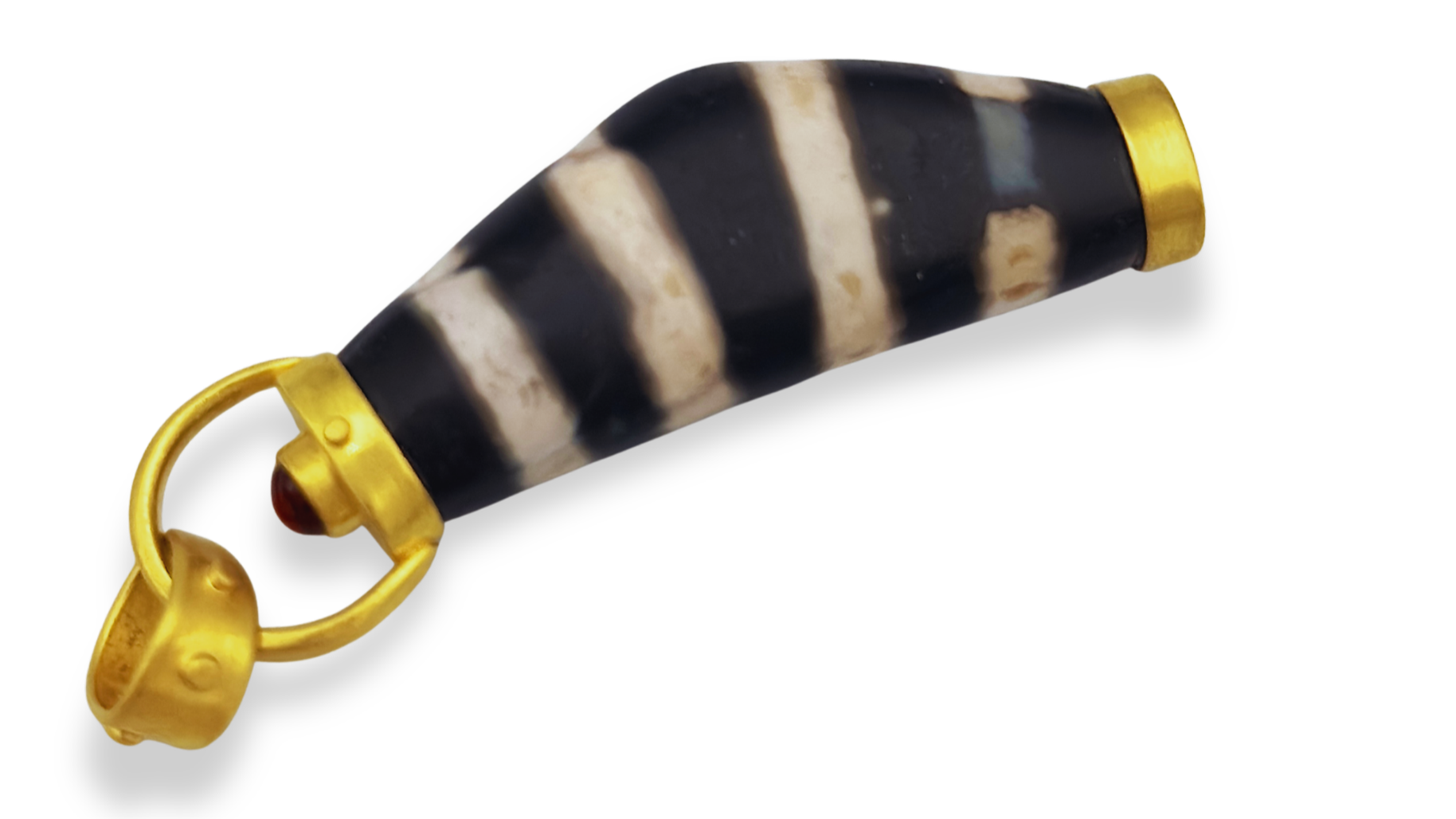
Abundance Pendant. This baby is mine. I need all the help I can get..
